

Apple, Open Up! Why Eustella Must Become the Sister of Siri AI
You have to give Apple credit for this: what the company presented at WWDC 2026 with Siri AI is technically impressive. After two years of delay, the once-mocked voice assistant has become a genuine AI agent. Siri AI understands personal context from messages, emails, and photos, recognizes what's happening on screen, and orchestrates workflows across app boundaries. A system orchestrator taps into the Spotlight index and the App Toolbox, while the Foundation Models — developed in cooperation with Google's Gemini — run on-device and via Private Cloud Compute.
That's the future of the smartphone interface. And to be clear upfront: we're genuinely big Apple fans. Hardly any company builds hardware and software so consistently as one piece, and hardly any takes privacy as seriously. That stance deserves respect, and it's a key reason why millions of Europeans love Apple devices and trust them with their most personal data.
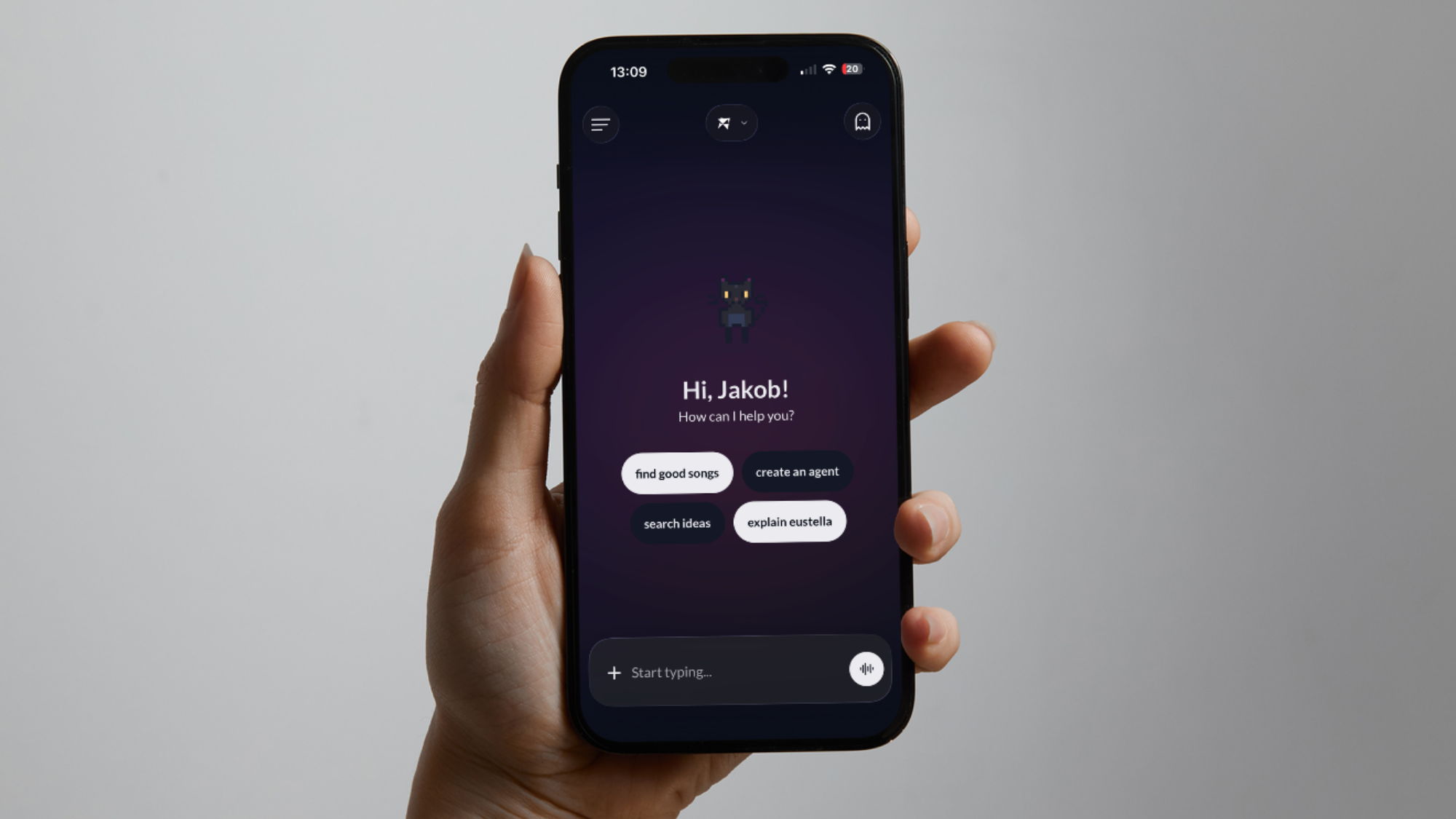
But that's exactly where the problem begins. Because eustella, as the new European AI agent also available for iPhone, would be at a purely technical disadvantage compared to Siri AI.
The Unfair Home-Field Advantage
No other AI agent on the iPhone gets anywhere near this level of access. They all live in their app sandbox. They can't see what's happening on screen. They can't look through the iMessage history to find last week's hotel booking. They can't trigger an action in a third-party app without the user switching to that app and typing it in themselves.
Siri AI can do all of that. Not because Apple's models are better (tellingly, they come from Google and are Gemini distillations), but because Apple grants itself operating-system-level interfaces that no one else gets. Specifically, these are the capabilities that make the difference between Siri AI and every other AI app on the iPhone:
Personal Context: Siri AI searches personal messages, emails, photos, and documents, finding things like last week's hotel booking number or restaurant recommendation. An AI app sees none of that — it only knows what the user tells it.
Onscreen Awareness: The assistant recognizes what's currently displayed on screen, answers questions about it, and directly executes matching actions. For an AI app in its sandbox, the rest of the screen is invisible — it would have to ask for screenshots.
App Orchestration: Siri AI moves across app boundaries and completes entire workflows — from looking up an address to booking in a third-party app. An AI app can at best open a link and then leave the user to keep tapping on their own.
Visual Intelligence: Deeply integrated into the Camera app, Siri AI analyzes the real world through the lens — including actions like splitting a bill via Apple Cash. AI apps have to take the detour of uploaded photos.
Access points: Siri AI is everywhere — side button, "Hey Siri," Dynamic Island, Spotlight, system-wide context menus, Apple Watch, CarPlay, AirPods. An AI app is one icon among many that the user has to actively open.
Siri AI's competitive edge, then, isn't an innovation achievement. It's a platform privilege.
In economics, this is called self-preferencing: the gatekeeper favors its own service on its own infrastructure. This is precisely what the Digital Markets Act was written against. Anyone classified as a gatekeeper may not equip their own services with exclusive system access that's denied to competitors. Interoperability isn't a request — it's an obligation.
No EU Launch for Siri AI
Apple has announced that it will not roll out Siri AI on iPhone, iPad, and Apple Watch in the EU for now, accompanying this with the familiar narrative: regulation endangers users' privacy and security, and the company is "working hard on a way forward."
Translated, that means: Apple would have to make the interfaces that make Siri AI so powerful — Personal Context, Onscreen Awareness, App Orchestration — available to third parties too. And Apple apparently doesn't want that. The company would rather forgo 450 million potential users than share the platform privilege.
One can lament this as a competitive disadvantage for the location, and yes: for European iPhone users, it's annoying in the short term that the most exciting Apple feature in years is passing them by. But the alternative would be worse. A Siri AI that sits exclusively and without competition at the deepest level of the operating system would end the AI assistant market on the iPhone before it even began. Once someone uses the assistant that knows all their personal data and can control all their apps, they won't switch away. The lock-in would be extremely strong.
What Needs to Happen Now — and Where eustella Comes In
The second step is still missing, though. It's not enough for Siri AI to pause in the EU. The DMA's goal was never to block features, but to open them up. The Commission should therefore give Apple a clear path: Siri AI may launch in Europe as soon as the underlying interfaces are available to third parties without discrimination. Personal Context, onscreen context, system orchestration: whatever Apple grants itself must also be open to others via API. Just as NFC was opened up for other payment apps alongside Apple Pay, the iPhone must also open up to other AI agents.
A European assistant with access to Personal Context and app orchestration, but with data processing under European law, on European infrastructure, without a detour via Californian or Chinese servers: that would be the true sister to Siri AI. Not as an Apple replacement, but as a choice. The user decides for themselves which assistant gets to operate at the system level, just as they can already choose their browser and search engine today. That freedom of choice is precisely the logic of the DMA, thought through to its conclusion.
Of course, Apple will object that deep system access for third parties is a security risk. That argument can't simply be dismissed, and that's exactly why Europe should impose high, verifiable requirements on anyone who wants to use these interfaces: audits, certification, clear liability. Private Cloud Compute shows that verifiable privacy architectures are possible. They just must not remain Apple's monopoly.
Siri AI is a promising product from a company we like a great deal. It would be an even better one if it had competition on equal footing. The DMA has opened the door for that. Now Europe must walk through it, and European providers must be ready to step up. We are ready.